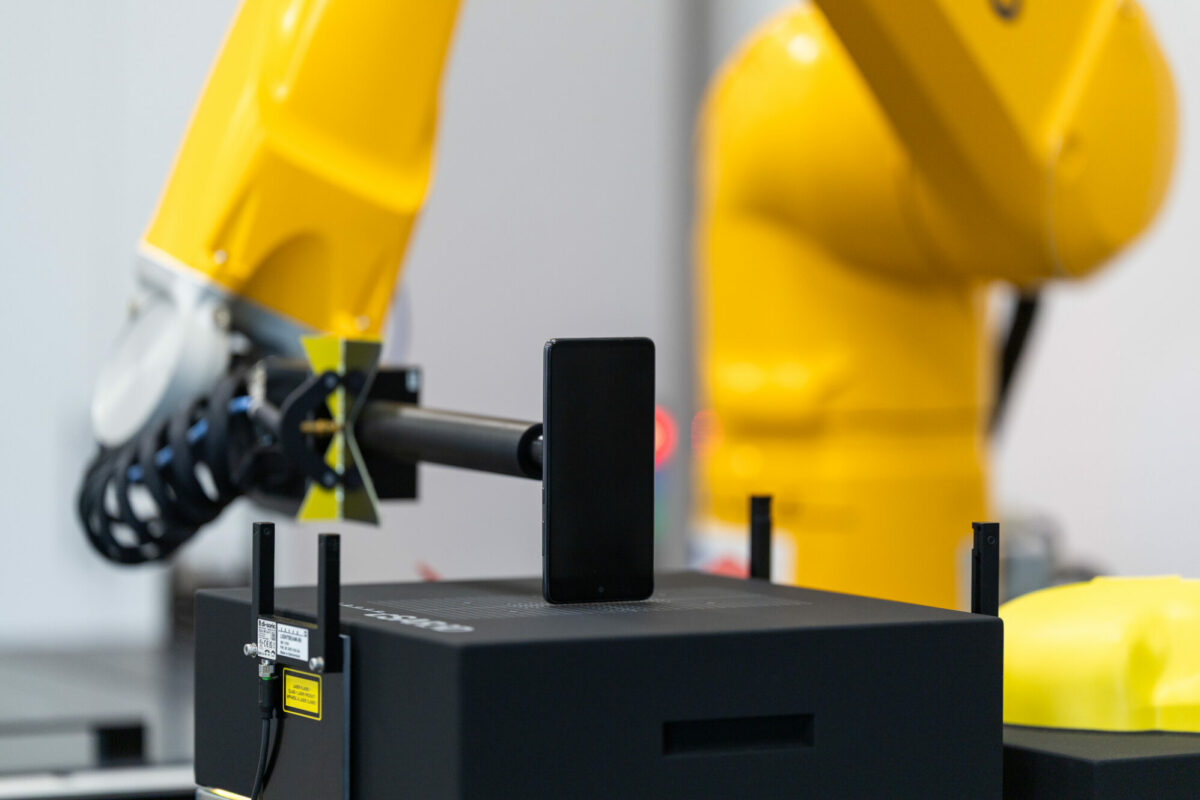
Although strict safety requirements apply in Lithuania, every year devices enter the market that may pose a risk to human health when in use. From now on, control of electronic and wireless communication products is tightening – the Communications Regulatory Authority (RRT) is beginning to test them in its own laboratory. If a device is found to exceed the permitted electromagnetic radiation limits, it will be immediately removed from sale.
“Starting with next year, we plan to actively inspect mobile phones sold in both physical and online stores. The electromagnetic fields they emit are significantly stronger than those of other radio devices, so our primary focus will be on mobile phones,” says Arvydas Giedraitis, Head of the RRT Electromagnetic Compatibility Division.
Testing will not be limited to phones
All testing will be carried out in the new RRT electromagnetic compatibility testing laboratory in Kaunas, which opened its doors a year ago. The advanced equipment purchased with European Union (EU) funds allows for specific absorption rate (SAR) tests not only for mobile phones but also for other radio communication equipment —laptops and tablets, headphones, and other wireless communication devices.
“Simply put, the devices will be tested to determine whether their radiation is harmful to humans and whether it is safe to hold the device close to the head or body. Previously, such testing was not conducted in Lithuania, so unsafe products were removed from the market much more slowly—only after receiving information from regulators in other countries,” the RRT representative explains.
The laboratory’s Anritsu base station simulator allows measurement of all types of mobile phones operating on 2G, 3G, 4G, and 5G networks within the 13 MHz–7.7 GHz frequency range.
Orders from other countries are expected
The RRT electromagnetic compatibility laboratory is the only one among all EU communications regulators accredited to perform SAR measurements using two different methods: the traditional physical-phantom scanning method and the so-called “fast SAR” method, which uses a probe array. This allows measurements to be performed using the test method which was applied by the manufacturer of the mobile phone.
Devices exceeding the EU-established electromagnetic radiation limits (2 W/kg for the head and trunk, 4 W/kg for limbs) will be immediately withdrawn from the market, and all EU countries as well as the European Commission will be notified of such violations in accordance with established procedures.
“RRT has been designated as the official European Union’s testing facility (EUTF) for radio equipment and electromagnetic compatibility, so we expect that SAR testing services will be used not only in Lithuania but that other EU market regulators will also send us orders for testing,” says A. Giedraitis.
The new RRT testing laboratory with an anechoic chamber in Kaunas was opened exactly one year ago; its installation cost 1.8 million euros.
Updated on 2025-12-08